Converting customers to fans
A customer buys your pizza. A fan tells people about it, forgives you for a late Friday and orders again without a coupon. Here is how a shop moves people from one to the other.
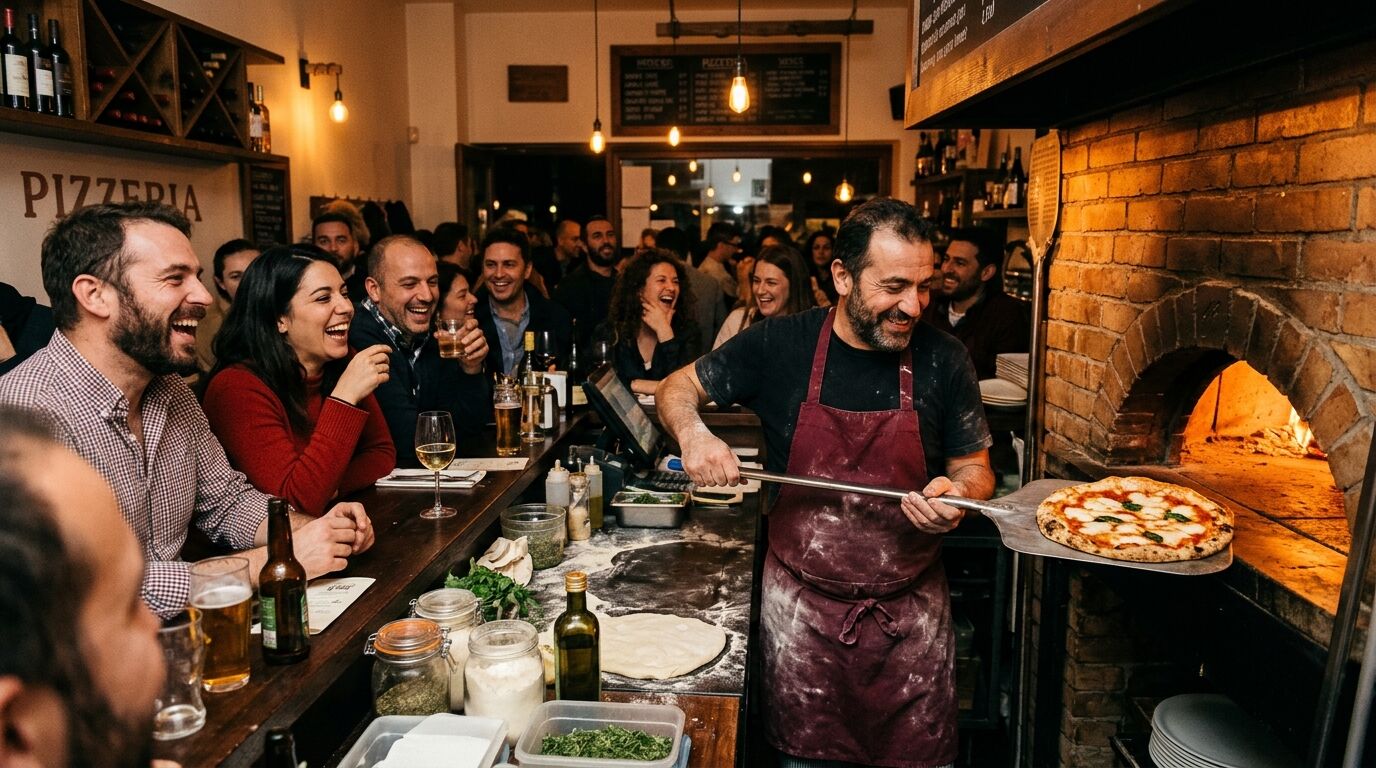
Every pizza shop has them. The guy who orders the same large pepperoni every Thursday and gets annoyed if you ask for his address. The family who did their kid's last three birthdays with you. The nurse on nights who calls at 11:40 because she knows you close at midnight and she knows you will pick up.
Those people are not customers in the way your marketing software thinks of customers. They are fans. And the gap between the two is where most of the money in this business is made or lost.
A customer has a transaction with you. A fan has a relationship with you. The customer compares you with the place down the road on price and delivery time, every single time. The fan has stopped comparing. That is the whole difference, and it is worth a great deal.
What a fan is actually worth
Do the arithmetic on your own file before you believe anything in this article. Pull your customers from the last twelve months and sort them by number of orders. In almost every shop we have looked at, the top fifth of the list accounts for well over half of the revenue. Some shops see the top tenth carrying close to half on its own.
Now look at the bottom of the list. A large share of your customers ordered once and never came back. Many of them were perfectly happy. They just never had a reason to think of you again.
That shape tells you where the work is. You do not need more customers nearly as much as you need more of your existing customers to become the people at the top of the list.
You do not need more customers nearly as much as you need more of the ones you have to become regulars.
Fans are made in the first three orders
The moment that matters most is not the first order. It is the second. Someone who orders twice is far more likely to order a third time, and someone who orders three times has usually started to form a habit. After that the curve flattens out and people tend to stay.
So the question for any shop is simple. What happens between the first order and the second?
In most shops the honest answer is nothing. The customer gets a receipt email, maybe a generic newsletter a week later, and then silence until a blanket promotion goes out to everybody on the list.
A shop that is serious about fans treats that gap as its most important campaign. A short, warm message a few days after the first order. Not a discount blast. Something that sounds like the people who made the pizza. Thanks for trying us. Here is what the regulars order. Here is the thing we are proud of. If a coupon goes with it, it should be for the next order, with a sensible expiry, so the customer has a reason to come back inside the window when the memory is still fresh.
Recognition beats rewards
Loyalty programs are useful. But points are not what turn a customer into a fan. Recognition is.
Think about the places you are loyal to. A barber who remembers how you like it. A bar where they start pouring before you sit down. You stay because being known feels good, and because switching would mean starting again as a stranger somewhere else.
Pizza shops can do a version of this at scale, because the ordering system already knows a great deal. It knows the usual order. It knows the usual night. It knows the birthday if you asked for it, and it knows when someone has been coming for three years.
Use it. A message on someone's hundredth order that just says thank you and names how long they have been coming will do more for that relationship than another two dollars off. Keep the message short and specific. Fans can tell the difference between being recognised and being processed.
- Mark the milestones: the tenth order, the first anniversary, the hundredth.
- Know the usual and reference it. "Your Thursday large pepperoni" reads as attention, not surveillance, when it comes from a shop someone already likes.
- Thank people for things that were not purchases: a review, a referral, a catering order for their office.
Stop discounting your best people
Here is the uncomfortable part. Many shops spend most of their discount budget on their most loyal customers. A storewide twenty percent off goes to everybody, and the people most likely to use it are the ones who were going to order that week anyway.
That is not generosity. It is a tax on your own margin, and it teaches fans that the price they normally pay is the wrong price.
Fans want something different. Early access to the new menu item. A taste of a pie that is not on the menu yet. A first look at the Super Bowl preorder before the slots fill up. These cost you very little and they say exactly what you want to say: you are one of ours.
Save the hard discounts for the people who need a push. The customer who ordered once in August and has not been back. The regular whose gap between orders has started to stretch. That is where a discount changes behaviour instead of rewarding behaviour that was already happening.
Make the bad night part of the story
Every shop has a bad Friday. A driver calls out, the oven goes down, a big catering order lands at the worst moment. Pizzas go out late and some of them go out wrong.
Customers who have a bad experience mostly just leave. But a customer who has a bad experience and then hears from you, quickly and honestly, often ends up more attached than one who never had a problem at all. Owning the mistake is one of the fastest ways there is to build trust.
That means watching for the signals. A complaint, a refund, a remake, a delivery that ran forty minutes past the quote. Each one is a chance. A short note from the owner or the manager, in plain words, with something to make it right on the next order. Not a form letter. Fans are often made on the worst night of the month.
Measure the fans, not the campaigns
Most marketing reports tell you how a campaign did. Opens, clicks, orders in the next seven days. Useful, but it misses the point. The thing you are trying to grow is the number of people who order from you regularly without being asked.
So count them. Each month, how many customers ordered at least three times in the last ninety days? Is that number going up? How many people moved from one order to two? How many of last year's regulars have quietly gone missing?
Watch that number per store. When it rises, the marketing is working, even if no single campaign looks spectacular. When it falls, no amount of open rate will save you.
Count the people who order without being asked. That is the number that pays the rent.
A plan for the next ninety days
If you want to start this quarter, start small and do it properly.
- Pull the list of everyone who has ordered exactly once in the last sixty days. Send them one honest message from the shop with a reason to come back inside two weeks.
- Find your top two hundred customers by orders in the last year. Do not send them a discount. Send them a thank you and an invitation to try something first.
- Set up one trigger for a bad experience: a refund or remake leads to a personal note within a day.
- Start counting regulars per store, every month, and put the number somewhere the whole team can see it.
None of this needs a new platform or a new agency. It needs a shop that decides its fans are worth paying attention to. The ones who already love you have been telling you that for years. All you have to do is answer back.